


Fall Sports Deserve a Smile Protection Plan
Fall brings a full calendar of youth sports across South Florida, from football and soccer to basketball, lacrosse, cheerleading, and more. With every practice, game, and tournament comes a chance for a bump, fall, or unexpected hit to the mouth. Even activities that do not seem like contact sports can lead to chipped teeth, sore jaws, or cuts to the lips and tongue.
Routine dental care helps young athletes stay comfortable, confident, and ready to play. As a children’s dentist in South Florida, we can look for loose teeth, cavities, gum irritation, and orthodontic concerns that may make protective equipment less comfortable. A little planning before and during the season can help families feel prepared for preventive visits, mouthguards, and unexpected dental injuries.
A Children’s Dentist in South Florida Prepares Athletes
A fall dental check can be especially helpful when sports begin, because children’s smiles change quickly. New permanent teeth may be coming in, baby teeth may be getting loose, and a child’s bite can shift as they grow. Braces, retainers, and other orthodontic appliances can also change the type of protection a child needs.
During a visit, we look at the teeth, gums, bite, and developing jaw. Finding a small concern early may help prevent it from becoming a distraction during school, practice, or game day. Protection should fit the child who is wearing it, not follow a one-size-fits-all plan.
It also helps when you share details about your child’s sports routine with us. Tell our team about:
- The sports and activities your child plays
- Any past mouth, tooth, or jaw injuries
- Soreness while wearing a mouthguard
- Loose teeth, sensitivity, or discomfort during play
Those details help us give guidance based on your child’s current dental needs. A child who has just started orthodontic treatment may need different support than a child with newly erupted permanent front teeth.
Fast Care Keeps Small Injuries From Becoming Bigger Problems
Sports injuries can happen in a moment, and some dental problems are not obvious right away. A small chip may expose a sensitive area of a tooth. A tooth that seems only slightly loose may need prompt attention. Damage to braces or retainers can also create sharp edges that irritate the cheeks, lips, or tongue.
We encourage families to take mouth injuries seriously, even when a child says they feel okay. Common concerns during fall sports include chipped or broken teeth, a tooth that has moved out of place, a tooth that has come out completely, cuts inside the mouth, jaw pain, and damaged orthodontic appliances.
If a permanent tooth is knocked out, act quickly:
- Pick up the tooth by the crown, which is the part visible above the gums, not the root
- Gently rinse it if needed, without scrubbing or removing any attached tissue
- Seek immediate dental care and follow the dentist’s instructions about placing the tooth back in its socket
- If it cannot be placed back safely, keep it moist in milk or a tooth preservation solution while traveling for care
Do not force a tooth back into place. Fast professional attention can help us assess the injury, relieve discomfort, and determine what the child needs next. Keeping our practice information accessible during games, weekend events, and out-of-town tournaments can make a stressful moment feel more manageable.
Custom Mouthguards Offer More Than Basic Protection
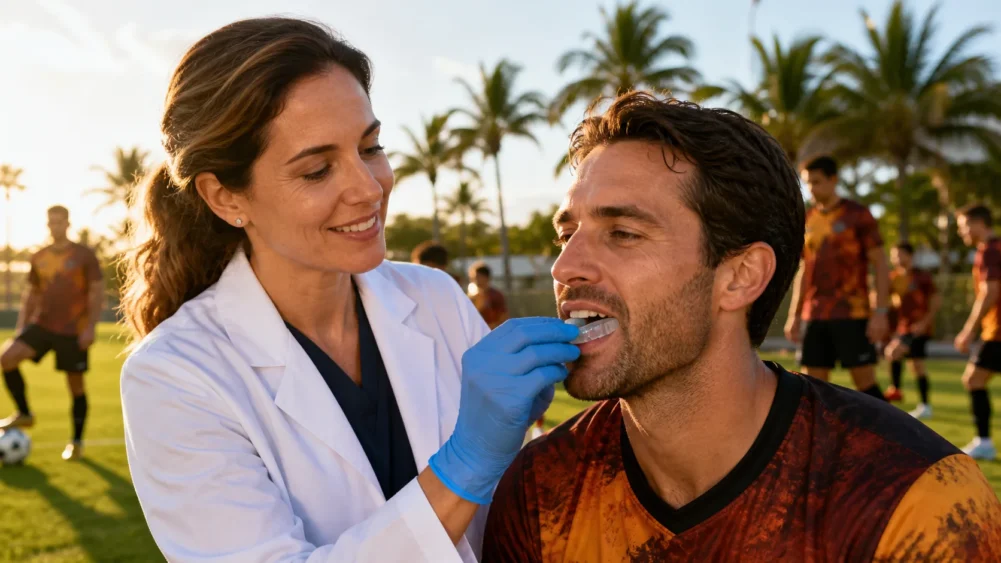
A mouthguard is one of the most useful pieces of sports safety equipment a child can wear. When it fits well, it can cushion impacts to the teeth, lips, cheeks, tongue, and jaw. Consistent use matters, which is why comfort is just as important as protection.
Store-bought guards may be easy to find, but some can feel bulky or loose. A guard that shifts during play may make it harder for a child to speak or breathe comfortably, and children are less likely to wear something that feels awkward. A custom mouthguard is shaped around the child’s teeth and bite, helping it stay secure while they move.
Children with braces need special attention. Brackets and wires can increase the chance of cuts and irritation after a fall or hit to the face. As teeth move during orthodontic treatment, a mouthguard may need to be checked or replaced so it continues to fit properly.
Parents can keep mouthguard protection on track by watching for:
- Cracks, tears, or rough edges
- A loose fit or frequent shifting during play
- Changes after permanent teeth erupt
- Discomfort after braces are placed or adjusted
- A guard that no longer covers teeth as it should
Book a Midseason Smile Check for Safer Play
The middle of the season is a smart time to notice changes that may have been easy to miss at the start. A child may have outgrown a mouthguard, developed tooth sensitivity, started braces, or taken a hit that seemed minor at first. At Pediatric Dentistry Orthodontics, we can evaluate these concerns and help families understand what may be needed for comfortable participation.
Simple routines also make a difference throughout the season. Make the mouthguard part of every practice and game bag, encourage children to speak up about mouth pain, and keep dental emergency supplies handy for longer tournaments. Replace a damaged or poorly fitting guard rather than hoping it will still do its job.
A protected smile helps children focus on the fun of playing, learning, and being part of a team. When mouthguards fit well and injuries receive prompt attention, young athletes can head into the rest of the fall season with greater comfort and confidence.
Support Your Child’s Healthy Smile This Season
At Pediatric Dentistry Orthodontics, we provide preventive care and guidance tailored to growing smiles. Choose a children’s dentist in South Florida who can help your child maintain strong oral health throughout every season. For an appointment or questions about your child’s dental needs, contact us today.