


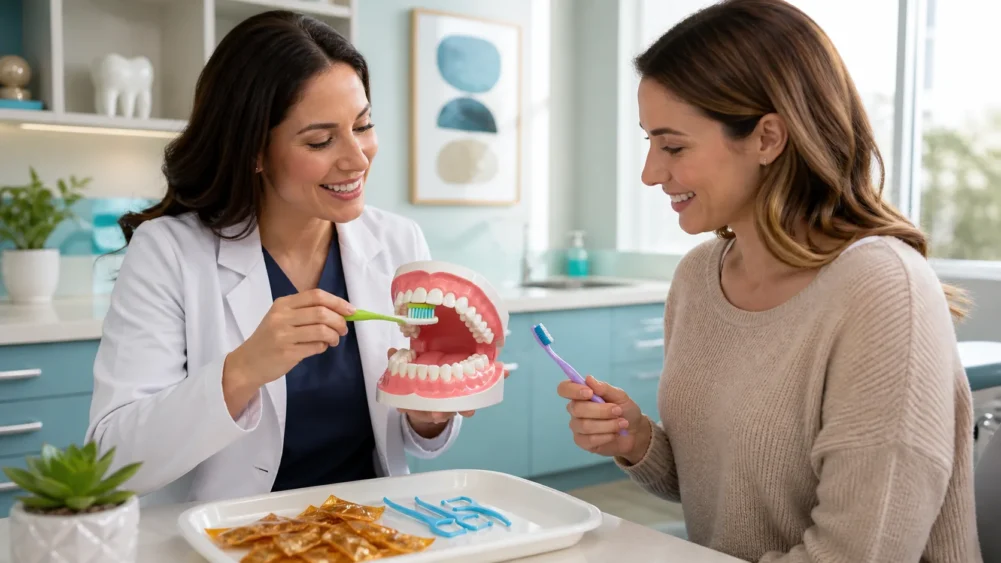
Sticky Halloween candy can cling to toddler teeth long after snack time ends. Gummies, caramel, taffy, and fruit snacks may hide in tiny grooves and between teeth, giving cavity-causing bacteria more time to feed on sugar. The good news is that you do not have to ban every treat to care for your child’s smile.
We recommend a simple plan: enjoy treats at a set time, offer water afterward, and make bedtime brushing nonnegotiable. Learning how to brush a toddler’s teeth after Halloween candy can make the season feel more fun and far less stressful.
Why Sticky Candy Needs Extra Attention
Not all sweets behave the same way in the mouth. Chocolate usually melts and clears away more quickly, while sticky treats can hang around on teeth. Caramel can press into the chewing grooves of back teeth, and gummies or fruit snacks may stick between molars where a toothbrush cannot easily reach.
Sugar gives mouth bacteria something to eat. As those bacteria feed, they create acids that can weaken the outer layer of teeth. Tiny teeth have plenty of nooks and crannies, so even a small piece of sticky candy can leave behind residue if it is not cleaned away.
The timing of treats matters, too. Nibbling candy all afternoon keeps exposing teeth to sugar over and over. Instead, we suggest choosing one predictable treat time, preferably with or shortly after a meal. That approach lets your child enjoy Halloween candy without turning the entire day into a sugar snack.
This gentle check can help you spot areas that need extra brushing or flossing.
Before bedtime, take a quick look at your toddler’s teeth under good lighting. You may notice:
- Candy pieces caught near the back teeth
- A shiny or sticky film along the gums
- Residue behind the front teeth
- Mouth rubbing, fussiness, or complaints of discomfort
Make Brushing a Calm Post-Treat Routine
Calm routines work better than a rushed battle at the sink. Use a soft, child-sized toothbrush and fluoride toothpaste. For children younger than 3, use a smear about the size of a grain of rice. Children ages 3 to 6 who can spit can use a pea-sized amount.
When you are figuring out how to brush a toddler’s teeth, aim for two minutes of gentle brushing. Toddlers still need adult help, even if they are eager to take over. Let your child practice first if they want, then follow up yourself to make sure all surfaces get clean.
Sticky candy tends to hide in a few common spots:
- The chewing surfaces of back teeth
- Along the gumline
- Behind the top and bottom front teeth
- Between teeth that touch, especially molars
Keep the tone upbeat. You can use a Halloween-themed timer, sing a favorite song, or let your child hold a second toothbrush while you do the real brushing. Some children enjoy brushing a stuffed animal’s “teeth” first. Candy does not need to become a reason for fear or guilt. It is simply a reminder that brushing matters.
Offer Water and Clean Between Teeth
Plain water is one of the easiest helpers after Halloween treats. Drinking a few sips can rinse away loose food particles and sugar while your child waits for their next brushing time. Water is a better everyday choice than juice, soda, or sports drinks, which can add more sugar and acid exposure.
Brushing after candy is generally helpful, especially if it is close to bedtime. If you are away from home or brushing is not practical right away, start with water and return to the normal brushing routine as soon as you can. What matters most is completing a thorough cleaning before your toddler goes to sleep.
Some sticky candy will settle between teeth, where brushing alone cannot reach. Once teeth touch side by side, they need gentle flossing. We recommend that an adult handle this step using regular floss or a child-safe floss pick with close supervision. Never hand a floss pick to a toddler to use alone.
Move slowly and keep your child comfortable. If floss catches on something or your child seems to have ongoing pain, do not force it. Your pediatric dental team can help you understand what may be causing the problem.
Create a Smile-Friendly Candy Plan
Sorting Halloween candy together can turn treat choices into a simple family routine. Consider setting aside the stickiest selections, including caramel, taffy, gummies, fruit snacks, and hard candies that stay in the mouth for a long time. Smaller portions and less-sticky choices can be easier on little teeth.
Pairing a treat with lunch or dinner is often more tooth-friendly than offering it during repeated snack breaks. Saliva naturally increases during meals and helps rinse the mouth. This steady routine also gives toddlers clear expectations, which can reduce requests to visit the candy bowl all day.
Try creating a predictable treat time after a meal, then put the candy away where children cannot reach it on their own. For extra candy, families may choose to:
- Donate unopened treats
- Trade candy for a small nonfood surprise
- Save a limited amount for special occasions
- Share unopened candy with friends or family
The goal is not perfection. It is limiting how often sugar stays on teeth throughout the day.
Know When Your Child Needs Dental Care
Halloween candy may reveal a tooth problem that was already developing, or a hard treat may lead to a chipped tooth. We encourage parents to pay attention when a child has pain that does not go away, sensitivity to hot or cold foods, swollen gums, a chipped tooth, or an injury from a fall.
Regular preventive dental visits can help us find early signs of cavities before they become painful. During visits, we can also give age-appropriate guidance about fluoride, flossing, food choices, and how to brush a toddler’s teeth as new teeth come in.
Our team at Pediatric Dentistry Orthodontics provides compassionate preventive, restorative, emergency, and specialty care for children in South Florida. When a child is dealing with ongoing discomfort or a dental injury, prompt professional care can help parents understand the next steps.
Keep Halloween Smiles Bright All Season
Sticky treats do not have to derail your toddler’s oral health. Limit grazing, serve treats at a planned time, offer water afterward, and brush carefully before bed. Floss teeth that touch when candy is caught between them, and watch for pain, sensitivity, or visible damage.
This simple post-treat routine can become part of every Halloween celebration. When brushing stays calm, consistent, and positive, children learn that caring for their teeth is just another part of enjoying the fun.
Build Healthy Smiles With Trusted Guidance
At Pediatric Dentistry Orthodontics, we help families learn how to brush a toddler’s teeth with age-appropriate techniques and compassionate care. Our pediatric dental team can answer questions about your child’s oral health, brushing habits, and preventive visits. Contact us to schedule an appointment for your child.